
November 1, 2026
Beret Colors and Their Meaning: Black, Tan, Green, Maroon and More
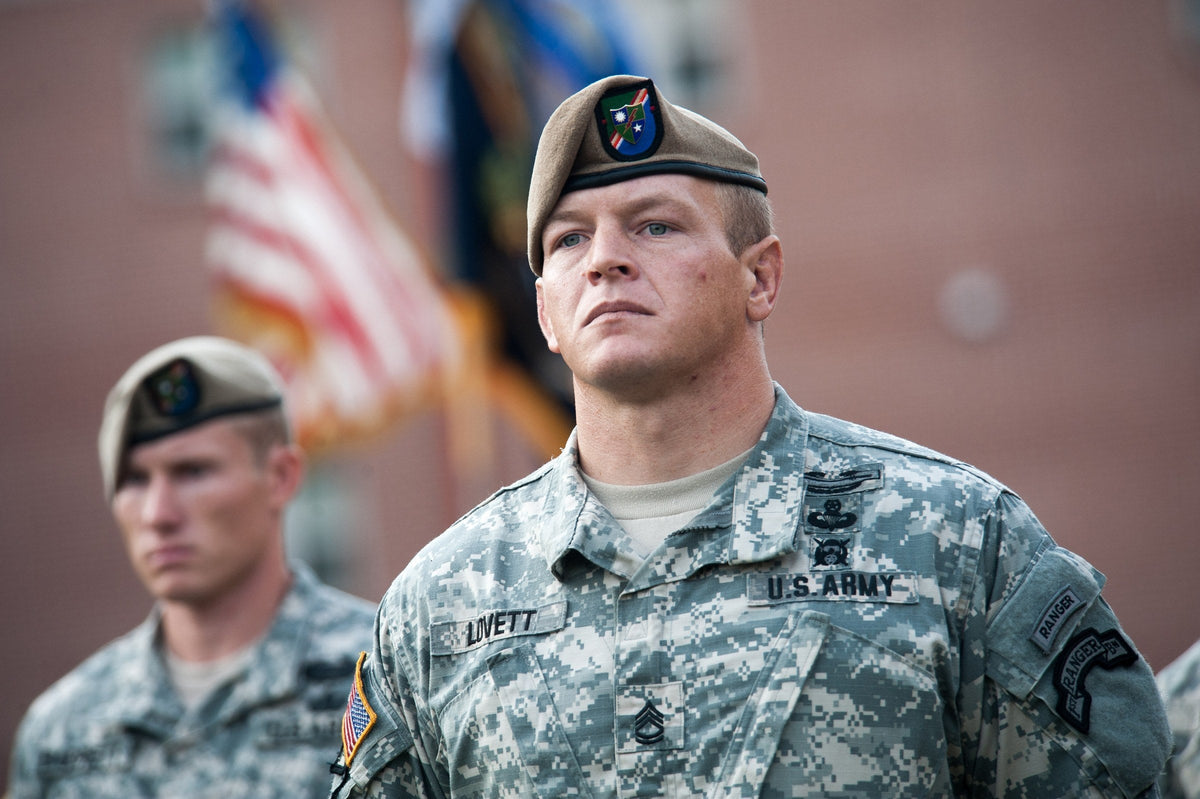
In the US Army, the black beret is the standard Army-wide beret, tan is worn by the 75th Ranger Regiment, green by Special Forces, maroon by airborne units and brown by Security Force Assistance Brigades. In the Air Force, dark blue berets belong to Security Forces, and special warfare fields such as Pararescue (maroon), Combat Control (scarlet), Tactical Air Control Party (black) and SERE specialists (sage green) have their own colors. The Navy, Marine Corps and Coast Guard do not wear berets as part of their standard uniforms.
US Army beret colors
Black
The black beret was the mark of the Rangers from the 1970s. In 2001 the Army made black the standard beret for all soldiers, and the Rangers moved to tan. Since 2011 the patrol cap has been the everyday headgear with the combat uniform, and the black beret is worn mainly with the service and dress uniforms and on certain occasions set by commanders.
Tan
The tan beret has belonged to the 75th Ranger Regiment since 2001, when black became Army-wide. Soldiers earn it by completing the regiment's assessment and selection, so it marks unit membership, not just completion of Ranger School.
Green
The green beret is the symbol of Army Special Forces. Special Forces soldiers wore it unofficially in the 1950s, and it was officially approved in 1961 after President Kennedy's support. It is so closely linked to the unit that "Green Berets" is the common name for Special Forces soldiers.
Maroon
Maroon is the color of airborne units, such as the 82nd Airborne Division and other units on jump status. It was adopted in the 1970s and officially authorized for airborne units from 1980, following a tradition of maroon berets for paratroopers in allied armies.
Brown
The brown beret has been worn since 2018 by soldiers of the Security Force Assistance Brigades, units that train and advise partner forces.
US Air Force beret colors
| Color | Who wears it |
|---|---|
| Dark blue | Security Forces (the Air Force's military police) |
| Maroon | Pararescue (PJs) |
| Scarlet | Combat Control |
| Black | Tactical Air Control Party (TACP) |
| Sage green | SERE specialists (Survival, Evasion, Resistance and Escape) |
Air Force beret colors are tied to the career field, and members earn them by finishing that field's training pipeline. A few other special warfare fields have changed their headgear over the years, so check current Air Force guidance for the latest list. See Air Force items.
Other services and other countries
- Marine Corps, Navy and Coast Guard: berets are not part of their standard uniforms. Marines wear the eight-point utility cover and service covers instead.
- United Nations: peacekeepers of many nations wear a light blue beret, or a blue helmet, while serving on UN missions.
Flashes and insignia
Army berets other than the standard black usually carry a flash, a small shield-shaped cloth patch sewn over the stiffener on the front left. The flash shows the unit's colors. Officers pin their rank on the flash; enlisted soldiers wear their unit's distinctive insignia. Units on the black beret wear a standard flash or one assigned to their unit. Browse insignias, medals and ribbons and patches.
For civilians, a plain beret is a classic hat. Wearing a unit color with a flash and insignia you have not earned, though, is disrespectful to the people who did, so leave the flash and insignia off. The pillar guide to every type of military uniform covers what civilians can wear.
How to shape a beret
A new wool beret is stiff, tall and fuzzy. Shaping makes it sit low and flat. A common method:
- Remove the fuzz: lightly shave the outside with a new disposable razor to remove loose fibers and pills. Go slowly to avoid cutting the wool.
- Wet it: soak the beret in warm water, then squeeze out the excess. Do not wet the leather or vinyl headband more than needed.
- Put it on: place the headband straight across the forehead, about an inch above the eyebrows, with the stiffener and flash over the left eye.
- Form it: pull the excess material down and to the right so it drapes over the right ear, and smooth the top flat.
- Dry it in shape: wear it until it is mostly dry, or let it dry on a head form in the same shape. Repeat if needed.
- Adjust the fit: tighten the ribbon in the headband and tie it off inside the back.
Some people cut out the inner lining for a flatter look. Check your unit's rules before altering an issue beret, and avoid heat sources such as lighters or hair dryers at close range, which can scorch the wool.
Beret sizing
Berets are sized by head circumference, measured with a soft tape about an inch above the eyebrows and around the widest part of the back of the head. Use this rough conversion:
| Head circumference | Hat size |
|---|---|
| 21 1/4 in (54 cm) | 6 3/4 |
| 21 5/8 in (55 cm) | 6 7/8 |
| 22 in (56 cm) | 7 |
| 22 3/8 in (57 cm) | 7 1/8 |
| 22 3/4 in (58 cm) | 7 1/4 |
| 23 1/8 in (59 cm) | 7 3/8 |
| 23 1/2 in (60 cm) | 7 1/2 |
| 23 7/8 in (61 cm) | 7 5/8 |
If you are between sizes, choose the larger and tighten the headband ribbon. Wool can shrink slightly during shaping, which is another reason not to size down.
To care for a beret, spot clean it and store it flat or on a head form. Shop berets, other military service hats and Army gear. For everyday field headgear, see patrol and fatigue caps.
Frequently asked questions
What does a black beret mean?
In the US Army, it is the standard beret for all soldiers since 2001. In the Air Force, it is worn by Tactical Air Control Party members. Before 2001, the Army black beret was associated with the Rangers.
Who wears the tan beret?
Soldiers of the 75th Ranger Regiment, since 2001.
Who wears the maroon beret?
US Army airborne units, and Air Force Pararescue. Many allied armies also use maroon for paratroopers.
Do Marines wear berets?
No. Berets are not part of the standard Marine Corps uniform. Marines wear covers such as the eight-point utility cover.
Which side does a beret drape to?
In the US military, the flash sits over the left eye and the excess material is pulled down over the right ear.
How do I know my beret size?
Measure around your head about an inch above the eyebrows and convert using the table above. Between sizes, go up and tighten the ribbon.
Can civilians wear a beret?
Yes. A plain beret is ordinary headwear. Avoid adding military flashes or insignia you did not earn.