
November 1, 2026
Army PT Uniform Guide: APFU History, Pieces, Sizing and Gym Use
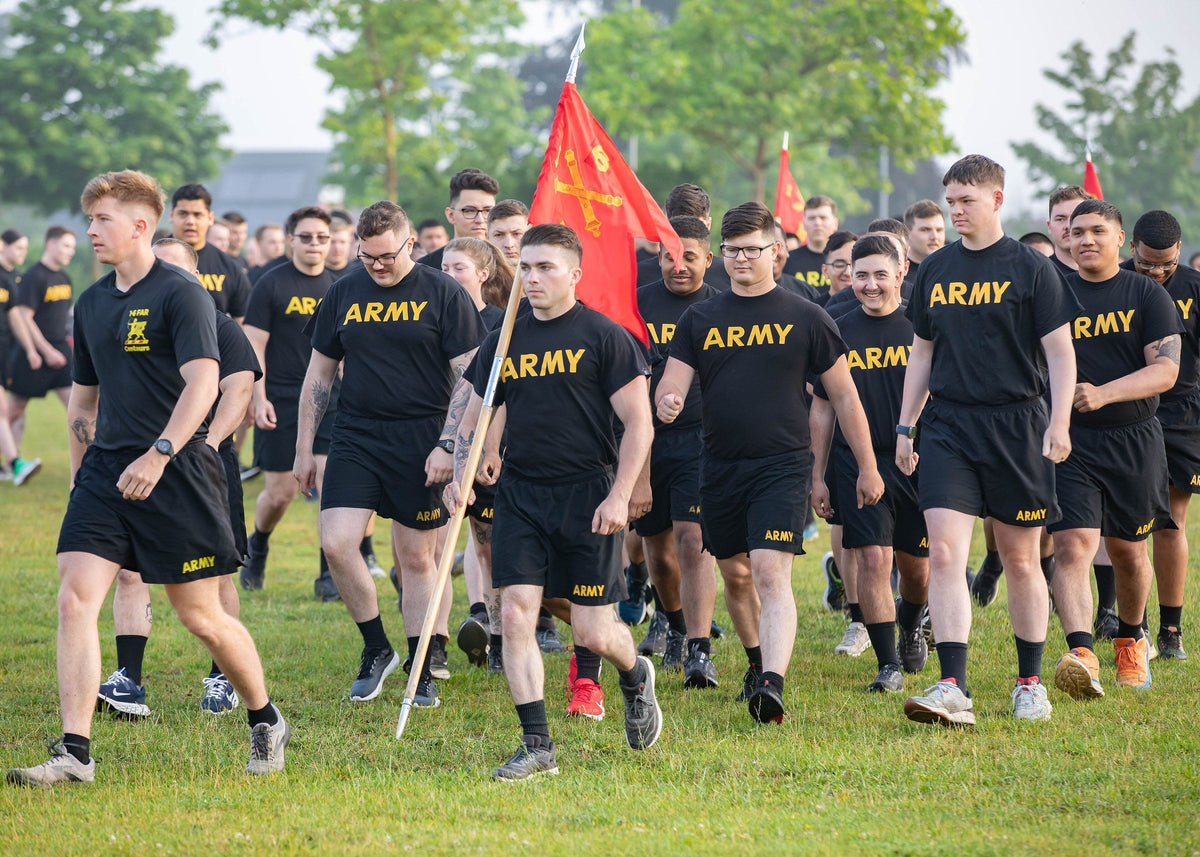
The Army PT uniform today is the Army Physical Fitness Uniform (APFU): black and gold shirts, trunks, a jacket and pants made of quick-drying synthetic fabric. It replaced the grey and black IPFU in the mid-2010s. The same pieces, or PT-style copies of them, make practical gym and running clothes for anyone.
A short history of Army PT uniforms
- Before the 1990s: soldiers trained in plain grey sweatshirts and sweatpants, cotton T-shirts and whatever shorts the unit allowed.
- IPFU (early 1990s to 2017): the Improved Physical Fitness Uniform brought a standard look: grey T-shirts with black "ARMY" lettering, black nylon shorts, and a grey and black nylon jacket and pants with a reflective stripe.
- APFU (mid-2010s onward): the Army Physical Fitness Uniform went to new recruits first in 2014, reached the wider force over the following years and became the only authorized PT uniform in 2017.
The APFU was designed with soldier feedback to dry faster, breathe better and fit a wider range of body types than the IPFU. The Army's fitness test itself has changed several times since then, but the uniform has stayed the same in look.
What is in the APFU set
| Item | Description | When it is worn |
|---|---|---|
| Short-sleeve T-shirt | Black, moisture-wicking, gold "ARMY" on the chest | Most PT sessions |
| Long-sleeve T-shirt | Black, same fabric and lettering | Cool mornings, layered under the jacket |
| Trunks | Black running shorts with gold "ARMY," built-in liner and a key pocket | Most PT sessions |
| Jacket | Black and gold, water-resistant, with reflective details and vents | Cold, wet or dark conditions |
| Pants | Black, water-resistant, zip ankles to fit over shoes | With the jacket |
Soldiers add plain black or white socks, running shoes of their choice and, in cold weather, an approved black fleece cap and gloves. Commanders decide what combination is worn on a given day based on weather and the activity.
Sizing the PT uniform
- Shirts: sized by chest, from XS to XXXL in most runs. The APFU shirt has an athletic but not tight cut; choose your usual T-shirt size.
- Trunks: sized by waist, with an elastic and drawcord waistband. If you are between sizes, go down for running and up for lifting or squats.
- Jacket: size for a long-sleeve shirt or light fleece underneath.
- Pants: waist size first; leg length should break at the top of the shoe. The ankle zips help with shoes but not with too-long legs.
- Kids and family: PT-style shirts are popular with family members too; some come in youth sizes.
Synthetic PT fabric shrinks very little, so buy your true size. Cotton PT-style shirts can shrink slightly, so allow a little room.
Using PT gear for the gym and running
PT uniforms are made for exactly what most people do at the gym: running, calisthenics, circuits and lifting. A few tips:
- Running: the trunks and short-sleeve shirt dry quickly and do not chafe like cotton. Add a reflective layer for early morning or night runs.
- Lifting: PT shirts and shorts move freely for squats and presses. Some lifters prefer a heavier cotton tee for grip on the bench.
- Cold weather: wear the long-sleeve shirt under the jacket and pants, or add a thin base layer. The cold weather layering guide explains how to layer without overheating.
- Rucking: pair a PT shirt with sturdy shorts or pants, good socks and a loaded pack for a classic military workout.
- Visibility: the reflective belt has long been part of Army PT culture. Whether a unit requires it has changed over the years, but for road running at dawn or dusk it is still smart.
Care tips
- Wash inside out in cold or warm water with like colors.
- Skip fabric softener; it clogs synthetic fabric and reduces wicking.
- Do not iron printed lettering; tumble dry low or hang dry.
- Wash soon after a workout so sweat does not set in as odor.
Where to shop
Browse Army gear for branch-marked PT shirts and accessories, T-shirts and tank tops and shorts for training basics, sweaters and hoodies for warm-ups, reflective and hi-vis gear for low light and socks for long runs. For thermal layers, see base layers.
To see how PT uniforms fit with the rest of the military wardrobe, read the guide to every type of military uniform. If you want the PT look for a team, the work and duty uniforms guide has tips for outfitting a team.
Frequently asked questions
What does APFU stand for?
Army Physical Fitness Uniform. It is the black and gold PT uniform that replaced the IPFU.
When did the Army switch from IPFU to APFU?
New soldiers began receiving the APFU in 2014, and it became the only authorized Army PT uniform in 2017.
What is the difference between IPFU and APFU?
The IPFU was grey and black with nylon shorts and a nylon jacket. The APFU is black and gold, uses moisture-wicking fabric, has trunks with a liner and pocket, and a lighter, water-resistant jacket and pants.
Can civilians wear Army PT clothes?
Yes. PT shirts, shorts and jackets are widely worn as workout clothes and are not restricted like rank or award insignia.
How should APFU trunks fit?
Snug at the waist with the drawcord tied, loose enough at the legs to sprint and squat. Size by waist.
Is the reflective belt still required?
Policy has changed over time and varies by unit and conditions, so soldiers should check local guidance. For civilians, a reflective belt or vest is a good idea for road running in low light.