
October 30, 2026
550 Paracord Explained: Strands, Uses, Bracelets and How Much to Carry
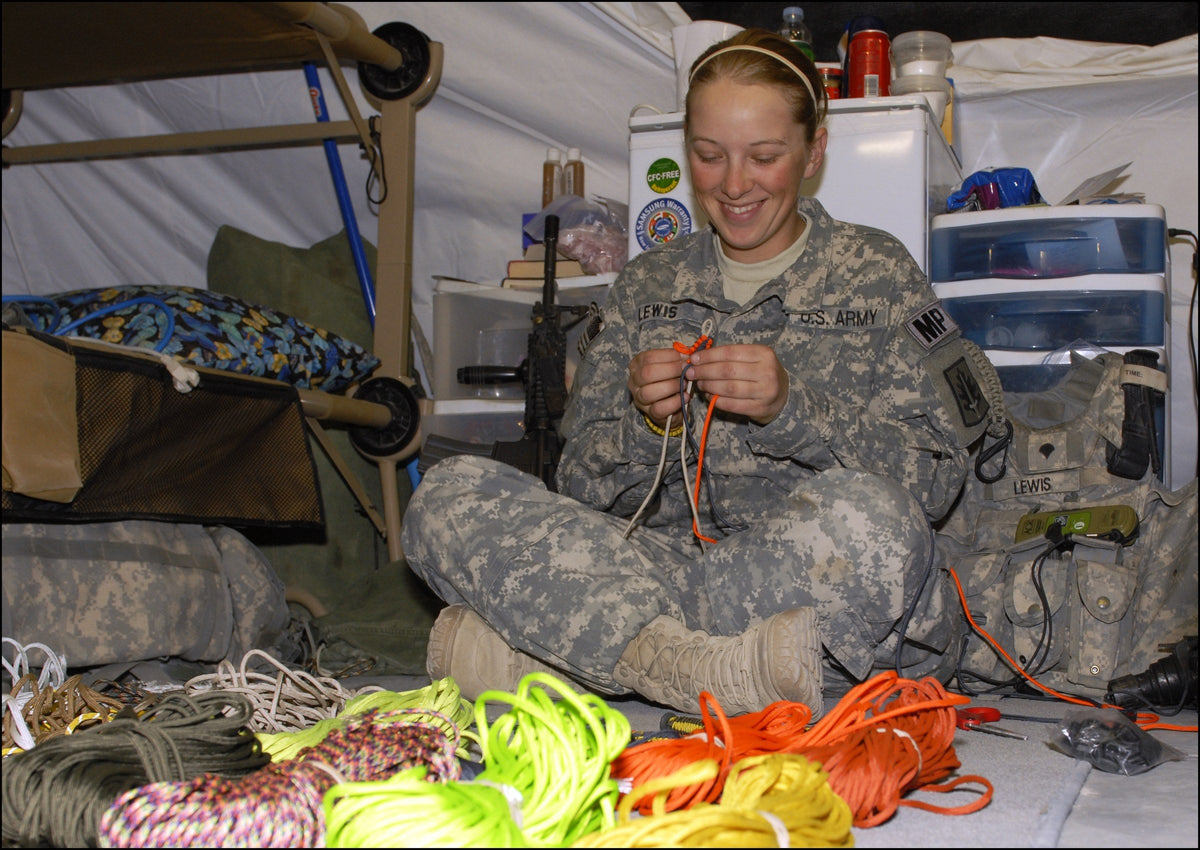
550 paracord is a lightweight nylon rope with a woven outer sheath and several inner strands, rated for a minimum breaking strength of 550 pounds. The name "550" comes from that rating. Type III, the common version, has seven inner strands inside the sheath. It started as parachute suspension line and is now used for camping, repairs, bracelets and emergency kits. This guide explains how it is built, what it is good for and how much to carry.
What "Type III 550" means
US military specifications classify parachute cord by type. Type III is the one with the 550-pound rating and seven inner yarns, and it is the type most people mean by "paracord." The sheath is braided nylon, and the inner strands are twisted yarns that run the length of the cord. The cord is lightweight, stretches a little under load and does not rot like natural rope. Browse paracords and cord, rope and strings.
Inner strands: the strand count
The seven inner strands (often called the core) are what make the cord useful. You can pull them out and use them separately as thread, fishing line or small ties, while keeping the sheath for heavier work. Other cords exist with fewer inner strands or none at all; these are lighter and weaker, so check the listing to see what you are buying. Genuine 550 paracord has a stated breaking strength and a core of seven strands.
| Part | What it does |
|---|---|
| Outer sheath | Braided nylon that protects the core and carries most of the load |
| Inner strands (7) | Add strength, and can be removed for small tasks |
| Rated strength | 550 lb minimum breaking strength |
What paracord is good for
- Shelter: Rigging a tarp, ridgeline or hammock. See hammocks and tents.
- Gear repair: Replacing a broken boot lace, strap or zipper pull.
- Securing loads: Tying down items on a pack or vehicle.
- Camp tasks: Clotheslines, hanging food out of reach of animals, guy lines.
- First aid: Improvised ties, with care and training.
- Tools: Wrapping handles, lanyards and keychains.
- Small tasks: Using the inner strands as thread or fishing line.
Pair it with carabiners and paracord accessories to make it more flexible.
What paracord is not for
Paracord is rated for its breaking strength, not as safety equipment. Never use it for climbing, rappelling, rescue or anything where a failure could hurt someone. For those uses buy rope made and tested for the purpose; see climbing ropes and harnesses and ropes and rappelling gear. Cord also loses strength when it is knotted, worn, cut or exposed to sunlight for a long time.
Paracord bracelets
A paracord bracelet stores cord on your wrist. The most common style is the cobra weave, which is simple to learn and holds several feet of cord. A rough rule is about a foot of cord for each inch of wrist circumference, plus extra for the buckle and finishing, though the length varies with the weave and thickness. Buy a little extra: it is easier to trim than to start again. Many people use a plastic buckle so the bracelet is quick to take on and off. See bracelets for ready-made styles, or buy cord and make your own.
- Measure your wrist and add allowance for the buckle.
- Cut the cord and melt or seal the ends so they do not fray. Use a lighter carefully, away from skin.
- Follow a weave tutorial. Cobra is a good first weave.
- Tighten each knot, trim the ends and melt them together flat.
How much paracord should you carry?
- Everyday carry: A bracelet, key chain or lanyard stores several feet. See key chains.
- Day hike: About 25 to 50 feet in your pack.
- Overnight or camping: 50 to 100 feet.
- Emergency or bug-out kit: A 100-foot hank is a popular choice, and it fits in a small pocket. See our bug-out bag checklist.
These are guidelines. Carry more if you will rig shelters, and less if weight is critical.
Choosing paracord
- Color: Olive drab, black, coyote tan and camo for low-profile use, or bright colors that are easy to see and find.
- Quality: Look for a clear 550-pound rating, a tight sheath weave and seven core strands.
- Length: Hanks of 50 and 100 feet are common; buy bulk for projects.
- Extras: Reflective cord, fire-starter cord and survival cords add features at some cost to simplicity.
See the survival and camping range under camping and survival gear.
Care and storage
- Keep it clean and dry, and rinse off salt or mud.
- Coil loosely, not tightly, to avoid kinks.
- Avoid prolonged sun exposure, which weakens nylon.
- Replace cord that is frayed or cut.
- Seal cut ends with a flame, carefully, to stop fraying.
Frequently asked questions
What does 550 mean in paracord?
It is the cord's minimum breaking strength in pounds, 550.
How many strands are in 550 paracord?
Type III 550 paracord has seven inner strands inside a braided outer sheath.
Can you climb with paracord?
No. It isn't rated for life-safety use. Use rope designed and tested for climbing.
How much paracord is in a bracelet?
It varies with the wrist size and weave, but a rule of thumb is about a foot of cord per inch of wrist, plus extra.
How do I stop paracord from fraying?
Cut the cord and quickly melt the end with a flame, taking care with the hot nylon and keeping it away from skin.
Stock up in paracords.