
October 30, 2026
Military Boots Buying Guide: Jungle, Desert, Combat and Tactical
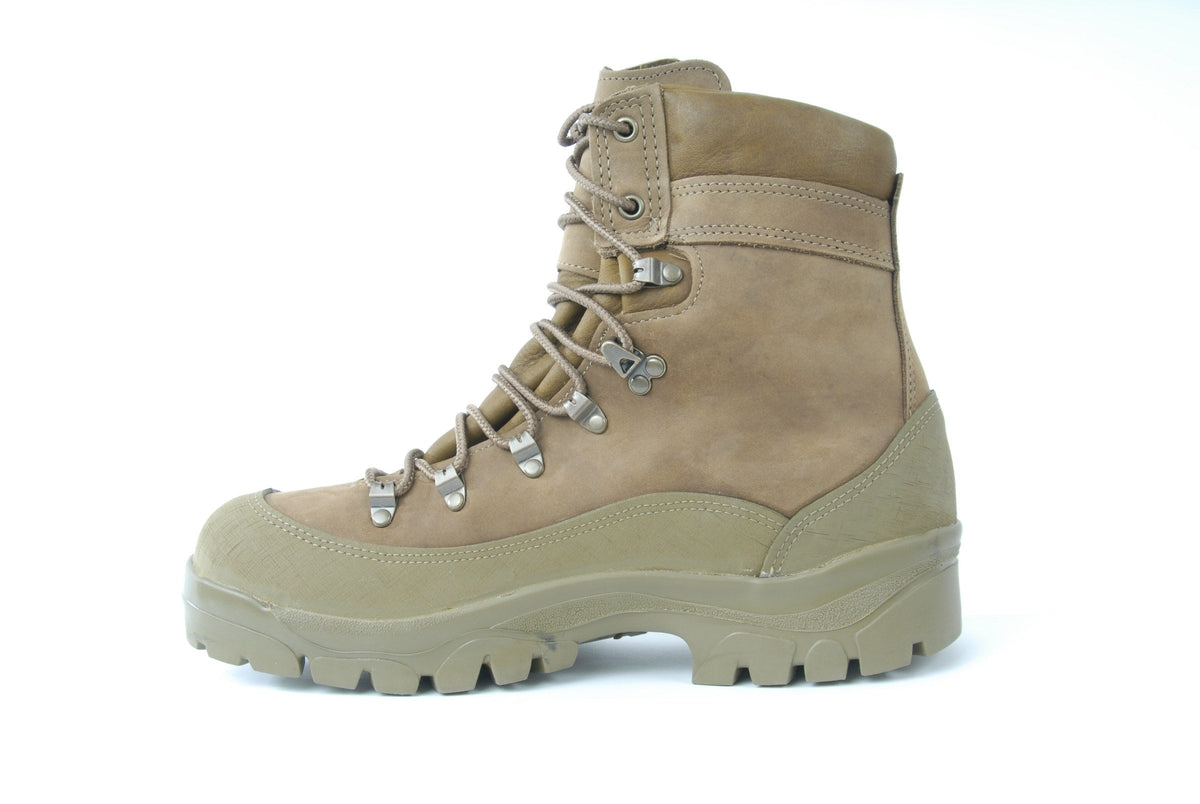
The right military boot depends on where and how you will use it: jungle boots for heat and wet ground, desert boots for dry heat, black leather combat boots for general duty, tactical boots for lighter and faster wear, and waterproof or safety-toe boots for harsh weather or work sites. Whatever type you choose, fit matters most: there should be about a thumb's width of space in front of your longest toe, and a snug heel that does not lift. This guide covers each type, fit, break-in, socks and care.
Main types of military boots
| Type | Best for | Typical traits |
|---|---|---|
| Combat boot | General duty, daily wear | Leather, sturdy sole, tall ankle support |
| Jungle boot | Heat, humidity, wet ground | Lighter, with drain eyelets and fast-drying panels |
| Desert boot | Hot, dry terrain | Tan color, breathable suede or fabric panels |
| Tactical boot | Duty and mobility | Lightweight, flexible, often with side zip |
| Waterproof boot | Rain, snow, mud | Membrane lining and sealed seams |
| Safety-toe boot | Work sites, heavy items | Steel, composite or alloy toe cap |
Jungle boots
Jungle boots came out of Vietnam-era needs for a boot that would not rot or hold water. They typically combine leather with nylon or canvas panels and have small metal vents or drain eyelets near the arch so water can escape. They are lighter than a full leather boot and dry faster. They suit warm climates, hiking in humid places and anyone who dislikes heavy boots. Check the boots collection for current styles.
Desert boots
Desert boots usually come in tan or coyote brown, with suede leather and fabric to ventilate in dry heat. The lighter color matches desert patterns and reflects some sun. See coyote brown for matching gear.
Combat and tactical boots
Combat boots are sturdy leather boots with a lugged sole and good ankle support, made for walking long distances and rough ground. Tactical boots are generally lighter, with more flexible midsoles and sometimes side zippers, so they are quick to get on and off. They are common among security officers, EMTs and law enforcement. For that kind of work, also see security clothing.
Waterproof boots
Waterproof boots include a membrane liner between the outer and lining. This keeps feet dry in rain but can run warmer in summer. A waterproof liner doesn't help once water pours in over the top, so watch the height. Browse waterproof and water-resistant gear.
Safety-toe boots
Safety-toe boots have a protective toe cap, typically steel, composite or alloy, designed to resist impact and compression. If your employer requires protective footwear, look for the safety rating stamped or labeled on the boot, such as an ASTM standard, and confirm the workplace requirement. Composite caps don't conduct cold or heat like steel does and are lighter.
How a boot should fit
- Shop later in the day. Feet swell during the day, so try on in the afternoon or evening.
- Wear the socks you will wear with the boots. Use thick socks if you plan to wear them in winter.
- Leave a thumb's width in front of the toes. Toes should be able to wiggle without touching the front, and not slide forward downhill.
- Lock the heel. Your heel should lift only slightly when you walk.
- Check the width. The ball of your foot should sit comfortably in the widest part without pinching.
- Lace snug, not tight. A strangled instep causes pain and numbness.
Breaking in your boots
Leather boots take time to soften. Wear them around the house for short sessions first, then on short walks, building to a full day over a couple of weeks. Do not use a new pair on a long march or a first full shift. If you feel a hot spot, stop and pad it with moleskin or adjust the laces before it becomes a blister.
Socks matter
Good socks do more for comfort than most people expect. Choose wool or synthetic blends that wick moisture, avoid pure cotton in wet or cold conditions because it holds water, and match the thickness to the boot. See socks for boot-ready options.
Boot care
- Clean first. Brush off dirt and use a damp cloth. Let boots dry at room temperature, away from heaters.
- Polish smooth leather. Wax polish restores color and adds a protective layer. See shoe care and Kiwi polish.
- Waterproof as needed. A wax-based treatment such as Sno-Seal soaks into smooth leather and helps repel water. Apply to clean, slightly warm boots and follow the instructions on the product. Do not use it on suede or fabric panels.
- Repair soles. A product like Shoe Goo can patch worn heels or edges.
- Rotate pairs. Give boots a day to dry between wears.
Choosing quickly
- Hot and wet: jungle boots.
- Hot and dry: desert boots.
- All-round or formal duty: black leather combat boots.
- Fast, lightweight duty: tactical boots.
- Cold and wet: waterproof, insulated boots.
- Work site: safety toe with the correct rating.
Frequently asked questions
How should military boots fit?
Snug at the heel and midfoot, with about a thumb's width in front of your longest toe, and no pinching at the ball of the foot.
Should I size up in combat boots?
Many people need a half size larger than their sneakers, particularly if wearing thick socks. Try them on with your socks.
How long does it take to break in boots?
Often one to two weeks of gradual wear, depending on the leather and your feet.
Are jungle boots waterproof?
Generally no. They are designed to drain and dry quickly, not keep water out.
How do I waterproof leather boots?
Clean them and apply a wax-based waterproofing product made for smooth leather, following its directions.
Find your pair in boots.